
Sewing Machines
Single Needle Heavy Duty Unison Feed Walking Foot
Model SW-1510L/DA/VS
Walking footLockstitchServo
Free shippingFinancing available
$2,170

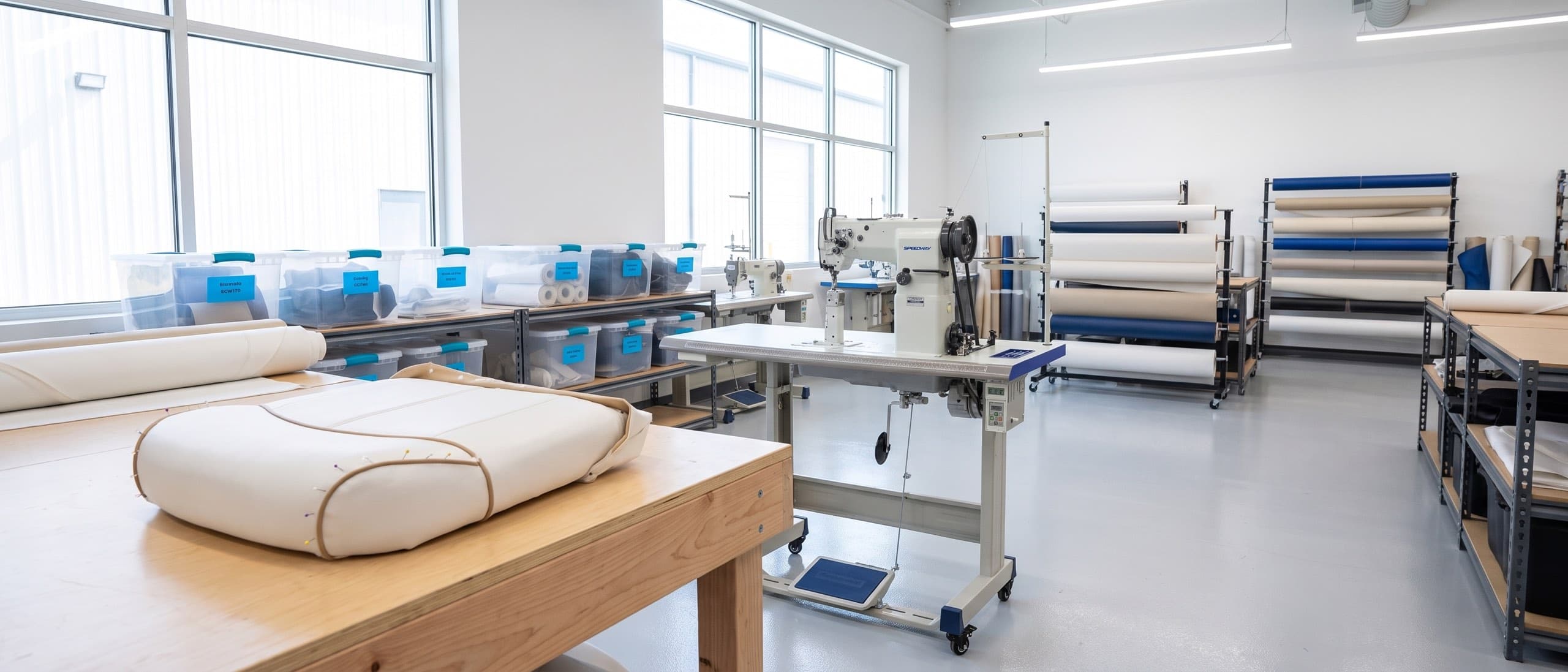
Use case · Upholstery
Most of what wears a sewing machine out on an upholstery floor is the same set of problems: thick layers, slippery materials, curved or 3-D workpieces, and seams that have to hold under daily flex. Three out of every four Speedway machines are built for exactly this.
Key takeaways
Three-layer leather + foam + canvas headliner. Eight-layer marine canvas. Performance velvet stretched over high-density foam. The feed system has to grip every layer simultaneously and advance them together — drop feed alone slips on these stacks. Walking foot, needle feed, and bottom feed dog moving in unison is the configuration that solves it. The SW-1510L family is built around this premise.
A motorcycle seat isn't flat. Neither is a curved sectional cushion or an automotive headrest. Flat-bed machines force you to disassemble and reassemble around the seam — slow and fragile. Post bed (SW-810 single, SW-820 double) and cylinder bed (SW-335) machines reach the seam line on assembled curves.
Performance velvet pile compresses under the presser foot and releases behind it — the layers shift unless every feed surface is moving together. Leather slips on foam and on itself. The unison feed handles both; the choice between SW-1510L (belted servo) and SW-1510N (direct drive) is configuration preference.
The seam quality starts with the cut. The CZD-3 straight-blade cutter handles the stack heights upholstery panels run to (an eight-inch blade clears 12 layers of canvas in a single pass). For leather goods, the SW-XYP-4 skiver thins the welt and joined edges before they reach the sewing line.
Recommended for upholstery
Sewing Machines
Model SW-1510L/DA/VS
Walking footLockstitchServo

Sewing Machines
Model SW-1510N/VS/DD
Walking footLockstitchServo

Sewing Machines
Model SW-820
Post bedLockstitchServo

Sewing Machines
Model SW-810
Post bedLockstitchServo

Cutting Machines
Model CZD-3
Common questions